MAX ELWOOD AKA DANNY EDWARDS
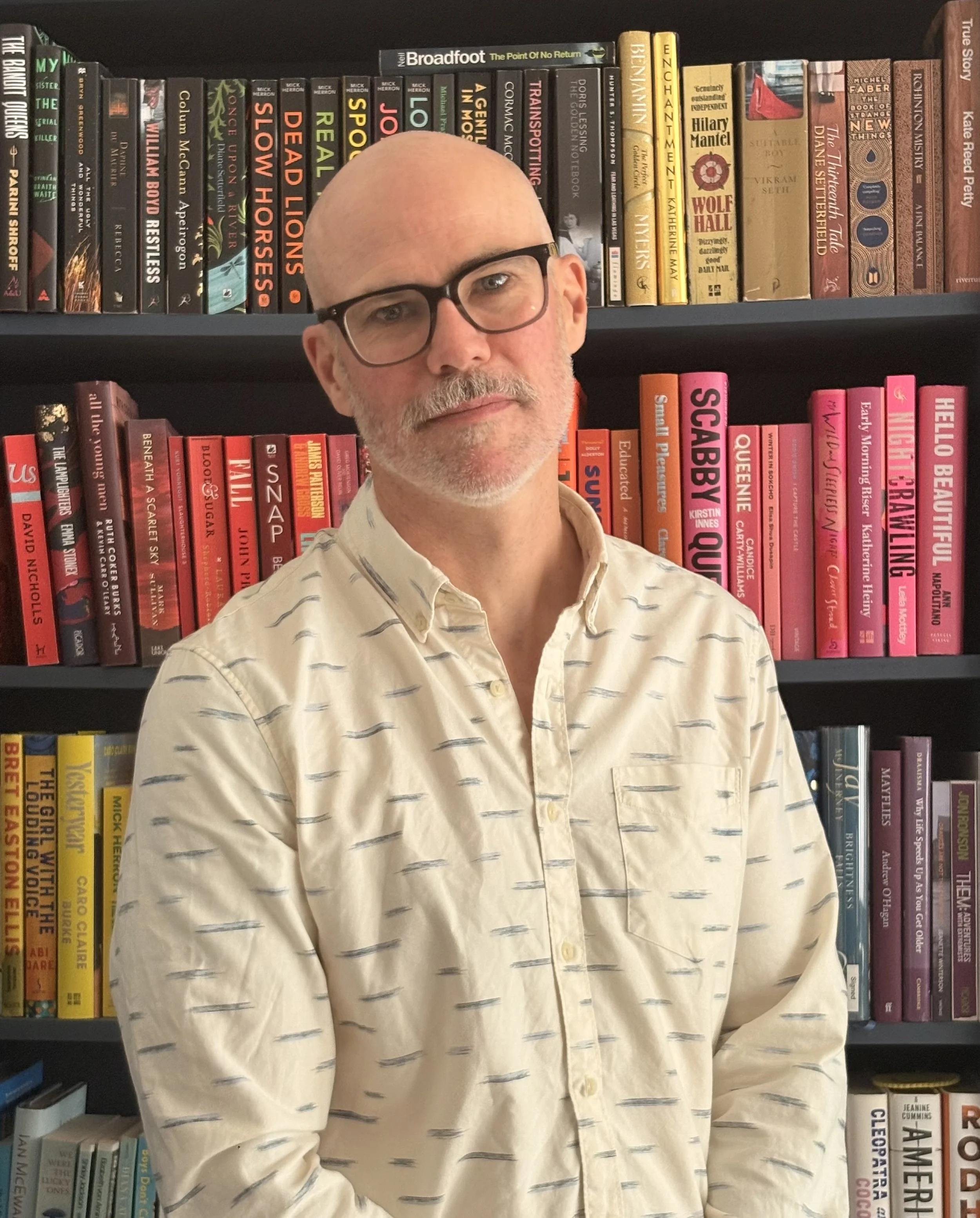
Max Elwood AKA Danny Edwards
Welcome back to other ways of seeing. This conversation is with Max Elwood, otherwise known as Danny Edwards. Danny Edwards is the editor of Shots, one of the most popular publications in the advertising industry. So he's very well known, and he's a very nice guy. And on top of being well known and nice, and very talented at being a journalist, he’s also published a book. He's written a novel and he's published a book. I think it's mind blowing and it's very, very cool.
We start the conversation with talking about how to get our work out there, falling in love with that process, social media, love / hate, you know, the usual. Meeting deadlines. We do talk about his process of publishing the book, self-publishing versus traditional publishing. His book, Dark Waters, is amazing. It's gripping. If you're into true crime or any kind of crime fiction, then you must read it. I urge you to read it. We talk about obviously Max Elwood, Danny's pen name. And we talk about pseudonyms in general. We also chat about when he gets feedback. We talk about his influences and writing about what you know. When to give up the day job or not to give up the day job, his creative background, and some advice for his younger self.
Danny told me recently that actually the book has gone wide, which means it's available to purchase on Kobo, Apple Books, Google Play Books and Barnes & Noble Nook, and obviously, of course, Amazon, where it has been living for a year or so.
I've also read Buried Lies, which is a short story, a prequel to Dark Waters, and also absolutely worth a read. And that is available on the Max Elwood website.
More mind blowing is that he has another book coming out, which is the next in the series. Hopefully out early 2027, and he thinks it might be called Necessary Evil. Which I love the sound of…
And before we get into our amazing conversation, here’s a quick word about our sponsor Hungryman… Hungryman is a global commercial production company, with offices in London, New York, Los Angeles and Sao Paulo. Hungryman's work spans, blockbuster spectacle, sharp comedy, and emotionally driven storytelling. Check out their website, hungryman.com, where you'll find all the amazing work that they do.. making art, dance activist pieces, films, and musicals, as well as commercials. Thank you Hungryman, for believing in this project.
Thank you to Danny, too, for taking the time to talk to me. I really loved our conversation. Right, let's get back to it…
Mel: It’s funny, isn't it? Yeah, like, one of my first conversations I had was with Sophie Ebrard, and she goes on about.. did you listen to it? And she goes on about like falling in love with the process because, you know, like planning a shoot and doing all the, you know, like doing all the exciting, dreamy part of it and having that vision and then executing it. And then it's all the other stuff after that is a real ball ache and instead of feeling like it's a ball ache, trying to turn that into something that you enjoy. And certainly for me, for my podcast, like it takes me fucking ages to get round to like editing it and like stealing bits of time here and there. And, you know, it just takes so long. But then actually, I quite enjoy the process.
Max/Danny: Yeah, that's it. I mean, you know, both of us and most people have got other priorities, right? Work and kids and family and just general life and stuff. So, the things that you carve out time for, you know, that are on the, I guess, you know, “side projects”, do sort of take a bit of a hit sometimes because you've got other stuff to deal with. But yeah, I mean, it's not, you know, it's a fun thing. I’m sure it’s the same for you. It's fun to do. It's hard work, but as long as you enjoy it, that's the thing. There is no point in having a kind of side project or something you sort of invest time in that you're not enjoying, even if it is quite difficult at times.
Mel: Do you ever have like a deadline? Do you give yourself a deadline to kind of finish things?
Max/Danny: I mean, I do, I mean, I guess that's the hardest thing. I have a deadline, so I do a website. I've got my own website and I do interviews on that as well, like written interviews. So there's a deadline in the sense that I have to send, well, I don’t have to, but I set myself a deadline of, like I send, a monthly newsletter, so I have to have some content, whatever that may be, each month for that.
In terms of books. I guess, you know, I set myself, you know, deadlines in my head, at least, of like when I hope to hit a certain point or finish a certain thing. Sometimes I'll hit those deadlines and sometimes I don’t. I mean, I'm used to working.. Deadlines are good, right? I mean, obviously working as a journalist, you've kind of got deadlines. We’re on deadline at the moment because we're going to press with the magazine. So, you know, we've got a hard deadline of it's got to be at the printers at, you know, whatever time, at whatever day.
But obviously when you're working for yourself, essentially, it's self published and no one's breathing down your neck, it's just your own dedication. It's sort of harder to sort of meet those deadlines occasionally.
Mel: Yeah, and also if you're always, if it's always sort of on the back foot, if you're always, you know, you have all the other priorities that give you money to live and to feed your family and stuff. It’s that personal project, the art practice is the one that kind of gets sidelined.
Max/Danny: Yeah, well, it's kind of low stakes, right? I mean, you know, high stakes in the sense you want it to be good and you want it to be successful and you want to make it as, you know, as interesting and as polished and stuff as you as you can, but low stakes in the sense that there's no real financial sort of, you know, issue with it. You don't have to do it. Otherwise you're not going to eat next week or you're not going to pay your mortgage and stuff. It is, you know, it is just a kind of side project, so the stakes are slightly different.
Mel: Mmm... but if you didn't do it, would you go mad?
Max/Danny: Yeah, I mean, I suppose I didn't do it for a long time, right? I mean, there was, you know, I kind of put it off and put it off and put it off. So I don't know if I would go mad. I mean, I guess I revert to just being a lazy bastard in front of the telly, you know, or whatever playing video games or something instead of instead of writing. So, you know, but I'm glad that I did start doing it, and I have done it, and I continue to do it, is quite interesting and challenging, and, you know, but it's a learning curve, and I'm only at the bottom of it, it feels like at the moment.
Mel: But you've published a book. I mean…
Max/Danny: Yeah, yeah. I know, yeah. No one is is more surprised than me, Mel.
Mel: I think it's such an amazing achievement. And I read it and I finished it last night because it took me so fucking long again to like find the time to read it and I did and it was so exciting.
Max/Danny: Okay, so you were on a deadline.
Mel: I was on a deadline.. But it's good to have deadlines! Yeah, I thought it was a fantastic book. It was really gripping. I really enjoyed it. It's like the kind of thing.. I mean, I could see it played out of my brain. It could be like a movie, it could be a series. It was, it's really exciting and I just, I kept sometimes, like making myself, well, reminding myself it was you, writing it and it was really like, I can't believe fucking Danny wrote this.
Max/Danny: Yeah, weird isn't it? Yeah, thank you. Kind of you to say. That’s very nice. But yeah, I'm glad it was, it was, you know, it filled, fulfilled its sort of purpose at least. So yeah, it's it is weird thing. Yeah. But obviously, I mean, it was me, but it kind of wasn't me because obviously I've written it under a pseudonym. So, yeah…
Mel: Oh yeah.. tell us about your… like, are we outing you as Max Elwood, Danny?
Max/Danny: Yeah, there's not many people in the, I mean, not many people in the industry that know that I do it. I mean, you know, I suppose just because I haven't told people for no other reason than that, and I suppose I chose, I think I probably chose to write under a pseudonym for 2 reasons, really. Kind of two Fs, I suppose. One was fear, just blatant fear of like, what if its rubbish. What if, you know, I sort of start shouting about this thing that I've done and send it to people or, you know, flag it on, you know, social media, whatever, and it's terrible, you know, because there is that fear of it being bad. Um, and the other F, I suppose, is freedom because I knew that doing a, doing a self-published book would mean, in my understanding of it, would mean that the really the only way of getting that out there and getting people to know about it is on social media.
And that's not really something that I do as myself. I mean, I've been on Facebook and I've been on Instagram, but I don't, I sort of let all that sort of drop by the wayside. I'm just not particularly comfortable or good at that side of things. So having a pseudonym sort of felt like I was slightly disassociated from it, so I could make mistakes and do silly things and, you know, write things that maybe wouldn't work or maybe, you know, wouldn't be the thing that I would do as me. But kind of have a slight barrier between it and me.
You know, and that pseudonym has kind of worked out well in that respect, you know, it's kind of been okay because it means I can play around on social media and do things that are kind of slightly uncomfortable, but I feel slightly protected from as myself, but also means that, you know, a lot of people that I do know and might be interested and might, you know, get more traction because, obviously I know quite a few people in the industry and stuff. So I don't have that leverage. I mean, different people have said different things. Like, you know, there are a few people in the industry that do know. So, like Chris Baker, who's been on this podcast knows about it and I talked to him about it. And Hugh Todd, who I've interviewed on my website and is a writer himself and has written and released a really good book and he sort of knows about it. And Sam Walker at Uncommon. And he's the one.. so he's a director and writes his own short films and films and stuff. But he was the one that's saying, you know, you should actually just, you know, put it out there, just, you know, have the courage of your convictions, essentially, and tell people that it's you doing it, and, you know, if you sort of get that traction and people think it's good, then if you believe it's good, then you should sort of tell people that you've done it. And he was probably right, to be honest with you. But I've sort of started going down this path. So here we are.
Mel: It’s funny, isn't it? I think there's this idea that when you create something and you finally put it out in the world that it's got to be perfect, and it's easier to hide behind, um, another character or someone else, and it's a shame because it's like you can't, you feel like you can’t do a bit of trial and error and be a bit crap and learn on the way. And I get it. I get it as, you know, as someone in an industry. You know, you've got your own persona, you've got to be this really professional person who's been doing this for ages and ages and ages and then suddenly you're doing something else that's super creative and it's from your heart. And you haven't practised it for like decades. So yeah, I mean, I totally, totally get it.
Max/Danny: There’s an element of also, because I started before writing and releasing this book. I'd written a couple of others. So I've been doing this for a while. I mean, probably, I don't know, 8 or 9 years or something, and I'd written a couple of books before this, and I, and even with this book, I tried to get it sort of traditionally published. So I would go down the route of sending it to agents and well, that's the 1st step is basically you have to try and find a literary agent and kind of sending it. And I had them all sort of professionally edited and kind of, you know, people that went through it and made sure that it, you know, it was as good as it could be, which was great. And obviously you have to pay for that and, you know, you have to kind of invest the time and money.
So I went down that road for a while with all of the books that I'd written. But, you know, some of the responses I got from agents were, you know, positive. “This is good, but we're not quite looking for this type of book or, you know, send us your next thing. This one isn't quite for us, but, you know, would be interested to hear what you do next”. But so ultimately, there was no traction. Even though the editors that I'd had had said, oh, you know, this is, this is good, I don't know, whether it was because I was paying them that they said that, but they said, this is good, and we can't see why, you know, an agent wouldn't request a full manuscript, because you normally just send them like three chapters or something and a cover letter and stuff in a synopsis, and then if they want to see the rest of it, they'll request a full, a full manuscript so that they can see if it is good all the way through. And I didn't get any of those requests. So I guess there was a bit of a like, oh, maybe it's not, maybe it's not really that good. You know, I've sort of put all my time and energy into this and I think, you know, I've stepped away, written the end and stepped away and gone, well, that's it. I'm now an author and, you know, goodbye advertising or something. But, um, but obviously that didn't materialise.
So when, you know, the third book in, the one that I released, Dark Waters. I think maybe at that point there was a bit of like, oh, you know, I haven't got, you know, no one in the in the publishing world has kind of given it that seal of approval. So there was a slight, maybe it isn't that good. I'm not sure. So there was there was a little bit of niggling of.. you know, I thought it was good. I thought it was okay and I, you know, as I wrote each one, I thought they were getting better. You know, you learn from your own mistakes and realise what you can and should do. But yeah, there's still that kind of.. in the back of your head, that little sort of devil going, nah, mate, you know..
Mel: The trouble is, you don't know why, exactly, they said no and it's so much to do with fashion as well, isn't it? And like what sells? Because for them, their agenda is, is this book gonna sell shit loads? Are we gonna make lots of money for the publishing company kind of thing, isn't it? So, um, so you don't really know. And it's funny when you when you stick your head out there and you publish it yourself and you and all of that. It's kind of, I don't know, I guess it's you, it's just you're free to do exactly what you want. Because I don't know what literally agents do.. do they sometimes come back and send you notes and go change this and change that?
Max/Danny: Well, I'm assuming so at some point. Yeah, I mean, obviously I didn't get to that point. That was the thing.
Mel: Which is great in a way because this is it. It's your work.
Max/Danny: Yeah, I mean, so look, some people go to self-publishing first and some very successful authors… Like Frieda McFadden, I think she's signed now, but like, you know, she's really successful. She's had films made for her books and stuff and she's a hugely successful author who was a self-published author. So lots, you know, I say lots. There's a lot of examples, I suppose, of self-published authors who have gone on to really good success, make a perfectly good living out of it, and some of them really good living out of it. But it is really difficult. So yeah, probably if you get to the stage where you've got an agent and then obviously they're trying to sell the book. They're invested in you financially and otherwise, and so they want it to be as good as they can, so they'll give you notes and help and stuff like that. And I guess that structure is what, you know, can help make the book better because.. and there is that egotistical kind of seal of approval of like, yes, okay, this person who knows what they're talking about and who is sort of in the industry has said, good job, you know, this is worth our time and effort to try and publish it. So when you don't get that, I guess there is a, you know, I guess understandably, and lots of people I’m sure I've gone through it.. I know they have.. of like, oh, you know, maybe I'm not as good as I can be. But then on the other hand, self-publishing does mean you are free to essentially approach it how you want. You don't have to do the things that they suggest you should do, and you can kind of go on your own timeline, and you can create your own covers, and you can, so that, you know, you can look at those things as positives or negatives, because it gives you freedom, but also you're doing everything on your own, and all the time and the effort and the creativity and the cost is borne by you. So you don't have that sort of structure around you if you sort of really want a little bit of advice or help.
Mel: But I think it's great that you've just got it out there, even though, you know, okay, so, you know, it hasn't been.. it hasn't gone down like the traditional route, but you have got it out there. You’ve got a piece of art that you've created and you've exposed the world to it. And I think it's incredibly brave and brilliant.
Max/Danny: Oh, thanks, yeah. It took a while though. I mean, because, you know, I'd written it and then obviously it takes a long time, like publishing is notoriously slow. So even when you start sending out things to agents. It takes a long time for them to get back to you. So, you know, there was a big gap between when I'd finished it, uh, you know, and edit it and had it professionally edited to, to when, you know, I got to the point where I'm thinking, oh, well, I've sent it to her, enough people look, you know, and it hasn't got anywhere, and then I kind of put it in the drawer for a bit. But then I thought, well, I've spent all this time and effort and, you know, sort of trying to put this together. So I'll try self-publishing. So that's, you know, that's the root, I went, and that was a whole other learning curve because that is a, that's a whole thing of itself of trying to understand Amazon and the various other things that go with that. So, yeah, it's still, like I said before, it's still a learning curve really because it's sort of quite intense process.
Mel: It’s a practice, isn't it? I mean, you kind of, you've got to go through the whole process and you learn and learn and it's all these extra bits to it that, um, that add up and eventually, you know, you may well be, you know, properly published and all the rest of it, but you've gone through all of that and you understand it.
Mel: So how long were you.. How, when when did you finish the book.. actually finish the book?
Max/Danny: So Dark Waters, I think I finished it probably about mid, what have you now, 2026, mid 2024, probably? And then I spent a few months, yeah, sending it to people, um, you know, and then it sort of, you know, obviously nothing happened there. So a couple of months or so I kind of put it in a drawer and just, you know, forgot about it for a bit. And in some ways, that's a good thing. A lot of people do say, you know, for writing. You should, when you finished it, put it away and come back to it with kind of fresher eyes and read through it again to see if, you know, if it really is as good as it can be.
But then, yeah, so about the start of 2025 is when I decided to self publish, or probably the end of 2024, and then I went through the, just trying to learn how to do that and the technical sort of issues of putting it on Amazon Kindle, and, you know, I wasn't necessarily a big Amazon fan. I don't buy that many books from Amazon because I could try and buy them from sort of bookshops. You know, I only recently got Kindle, really, to see what it looked like. You know, my book looked like on the Kindle. But, you know, I guess it is useful and most people buy the book via Kindle. But so that process of learning the technology and how to kind of create specific files and obviously getting covers and, you know, doing all the table of content, you know, the technical side of things, which I'm not particularly good at in real life anyway, took a while. And then, yeah, published in, I think about January of last year, but that was with a rubbish cover. I mean, I say rubbish. It was my cover that I designed, which I…
Mel: Oh, did you? Oh, is it changed? Does that not..?
Max/Danny: Yeah, so it changed. Yeah, because initially I thought, oh, that's all right. That will do. But, you know, I don't think I've got a copy of it anymore.
Mel: Oh man, I really want to see that.
Max/Danny: It wasn't great. I'll try and dig one out.
Mel: Yeah, try and dig one out. You can send it to me.
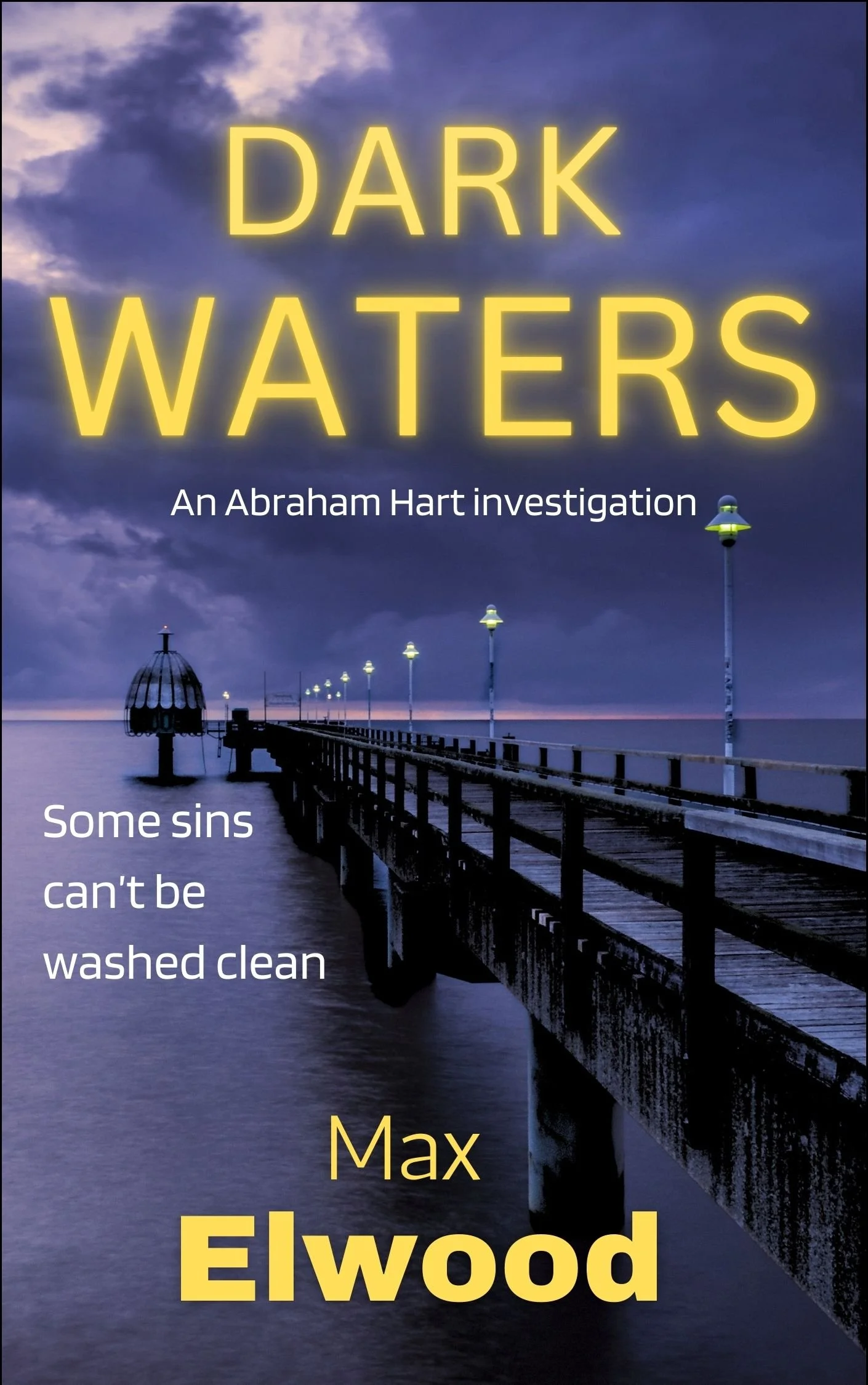
Danny’s OG cover (personally think it’s pretty good!)
Max/Danny: Yeah, yeah. So no, it wasn't great. And then I, you know, and I realised that that might not be a great thing. So only in about, so it probably went live about January 2025. It was only probably about March or April that I approached someone, a cover designer, who was really nice and writes sort of in the crime fiction, genre as well, as an author himself, and designs, covers. And so I, you know, told him this is the sort of thing I want, and, you know, so it's a much more crime-y, you know, it looks, you know, it looks like the genre, right? You know, it's sort of an obvious visual sort of, okay, this looks like a crime or thriller book, which is kind of what you want.
So yeah, so then I changed the cover about April probably of last year and then actually then it did get a bit more traction. So it did work. The cover is really important because that's the first thing that most people see, right? They kind of see the cover and go, oh, that..
Mel: Totally judge a book by its cover, right?
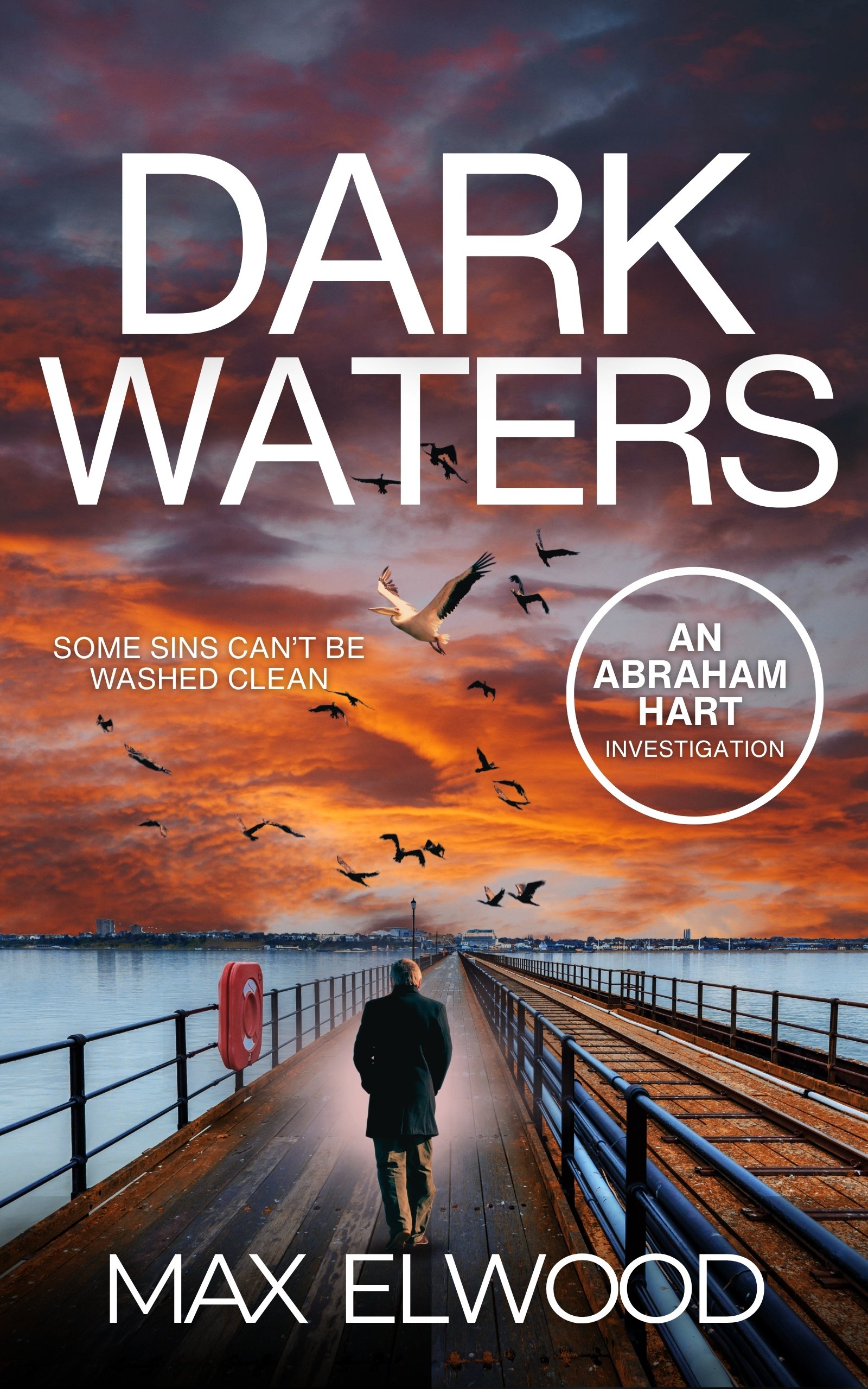
Dark Waters cover
Max/Danny: Exactly, yeah. I mean, that thing is absolutely true. So yeah, so when I did that, that kind of helped a bit and got a bit more traction and, um, and then yeah, and then it was, you know, the marketing process from there.
Mel: Yeah, I mean, there's so many parts to making a book. I'm really fascinated by it because it is all those sort of details and even the font and things like that. Did you have to choose and...
Max/Danny: Yeah, I mean, look, I went sort of just with the obvious, you know, Times New Roman and, you know, like, you know, being as obviously kind of bookish and like, as you would expect a book to look in the shops as I could, you know, because you want it to be something that people kind of go, okay, that looks like that's done relatively professionally and it kind of looks okay inside and, you know, the cover, you know, once I'd redone the cover, the cover looks good and, you know, you try and make it as professional as you can, because you want people to read it. And think, you know, and not think, oh, this is sort of just a self-published book, you know, self-publishing has got a much better reputation than it did have, you know, probably 10 years ago. It wasn't really called self-publishing, it was called vanity publishing. I mean, vanity publishing has always kind of been around where, you know, normally it was like older people who were writing their memoirs or something that, you know, not really was any interest to anyone other than them and their family, probably, and you could pay a company to kind of print, whatever, 10 books or something. But obviously with Kindle, and the internet and stuff like that now, which has exploded, you can, you know, self-publishing is a genuine sort of way of going as an author to kind of create make money and sort of get your work out there, which is great, but obviously the flip side of that, is there are tens, thousands, millions of other people doing the same thing. So it is, it's really hard to stand out.
Mel: Do you not want to see it in print though? Because, you know, I know that you, you've encouraged the print edition of the magazine for Shots. Finally, it's back and everybody's really, really happy about it. And you always loved that, you know, something tactile and something that you can flick through..
Max/Danny: I’ve got that. I’ve got a print book.
Mel: Have you? Have you actually got it? Because when I went onto Amazon, I couldn’t.. I could only get the Kindle version.
Max/Danny: There is a…
Mel: Oh, hello.
Max/Danny: I know, obviously this is an audio podcast, so showing a book is not..
Mel: It’s all right. You can like take a photo of it and then send it to me later. I'll put it on the website.
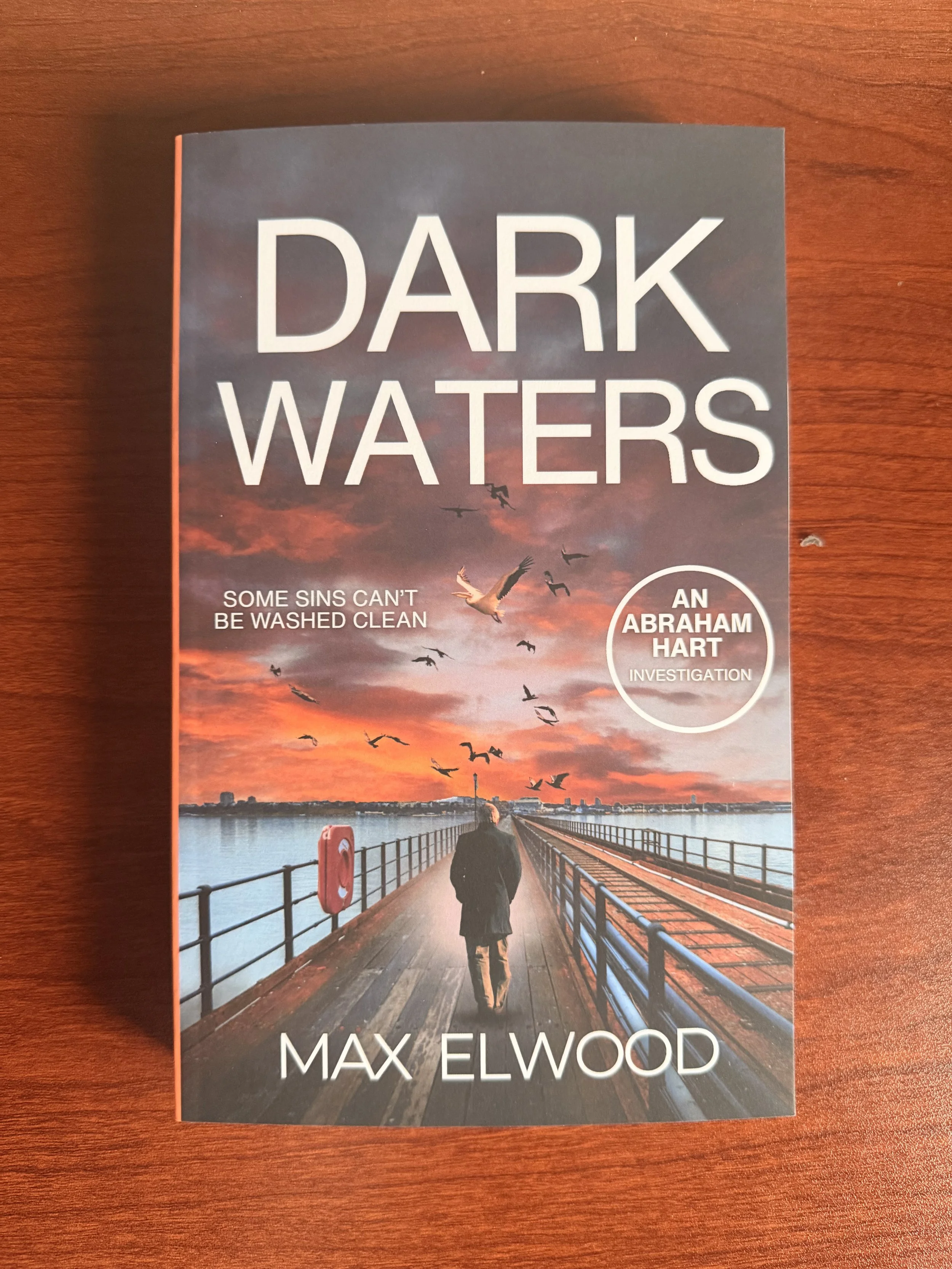
Dark Waters.. in print!
Max/Danny: So, yeah, you can absolutely on Amazon, you know, when you go onto the, if you go onto that page, the most books page, it will tell you you can buy an e-book, a audiobook, a hardback or a paperback and you choose which one you…
Mel: Hardback as well?
Max/Danny: You can, not for this, not, but you can, you know, on Amazon, you can buy hardback books. So yeah, you can you can do what you want, really. So, yeah, and print, obviously, is my preferred way of reading a book, and so that's definitely what I wanted to do. Um, so yeah, you can do that and it's, you know, and it's great, but yeah, like I said, the hardest thing, you know, like I said at the start, it took a long time to write the book and it's a lot of effort, a lot of time and a lot of sort of agonising about what, you know, words to use and sentences to use and plot structure and all that sort of stuff. Turns out that that's the kind of straightforward bit of self-publishing because getting the book out there, getting people sort of engaged with it and sort of, you know, buying it and reviewing it and stuff is the real challenge because it's still even like a year on, it’s still really hard to sort of do that.
Mel: Yeah, it is. It's all, it's kind of like the boring stuff, but, you know, the stuff that, you need to, or we need to try to kind of embrace and still enjoy. Otherwise things don't get out there, don't do they?
Max/Danny: Yeah, and that's it. That's like I say, social media, that's where it comes in because essentially that's the key way of getting news kind of people to be aware of it. And newsletters and stuff. So, you know, because I've got an author website. And actually the guy.. so I'm in part of a writing group, online writing group called.. So my editor, the guy that edited the book called Mark Stay, he runs a writing group called The Green Room, which is really good. Lots of authors, some sort of traditionally published, some not yet published, still writing, some self-published. We all come together and, you know, there's different topics we discuss and so it's quite good. So like a forum of sort of exchange of information and he knows a lot about the book world because he was he worked in publishing and he writes books himself and writes films and stuff, so he's a very knowledgable person. So yeah, being a part of that, it is helpful and interesting and sort of there's hints and tips of how to do it and what to do and what not to do, which is quite useful.
Mel: And that's the thing, isn't it? There's, um, like where, where in the process do you get feedback? Like, how do you know you're doing it well or do you not? Is it very solitary?
Max/Danny: I mean, it's got, I suppose writing, in general, is a solitary process generally, right? So, yeah, I mean, I guess you know sometimes yourself when something's going right. But yeah, you can sometimes there is that, you know, can't see the wood for the trees because you're so close to it. You can't, and I'm getting that point now in the new one that I'm writing is like, I can't tell whether this is good or not anymore. I've just got to the point where I've read it so many times or over sort of rewritten different bits that I've lost track, but that's when you have to kind of get honest opinion from, and it is useful having a, like a professional editor or giving it to. It's nice to give it to friends or family and stuff, but I guess it's harder to trust their opinion simply because they're not, you know, they're nice. Understandably, you know, like your wife or your husband or your sort of, you know, friends or what might not want to go. Do you know what? This is rubbish. So you might want to start again. They're more inclined to be positive, which is, you know, nice. So it's harder to trust.. even if they generally are positive, it's slightly harder to trust that. I find it slightly harder to trust that opinion because you think, well, maybe they'd just be nice because, you know, I would probably do the same. Um, so yeah, it is hard, but that's, you have to kind of play all through and get to the point where you think this is as good as I can make it, and now I need someone else to look at it with a kind of, you know, outside opinion and can kind of tell me what I've done wrong and what I've done right.
Mel: And so when did you start? Like, um, you said it was 8 years ago or 9 years ago, you started actually writing or did you have an idea in your head about what you wanted to write? Clearly are you a true crime fan?
Max/Danny: Yeah, well, so I'm a crime fiction fan for sure.
Mel: Ahh.. crime fiction.
Max: I read all sorts of books. You know, I like to sort of be relatively diverse in what I read, but yeah, crime fiction is probably a go to for me. As for when I said, I don't know, I've always wanted to be, I mean, I'm a journalist, right? I work in journalism. So I've always enjoyed writing and wanted to be a writer of some description. And, you know, even many years ago when I was younger, I kind of thought about writing a book and I always kind of, oh, you know, I remember sort of sitting in my house at one point thinking, well, by the time I'm 30, I'm going to have written a book, but, you know, I did about 2 chapters and that was it and I got fed up or, I don't know, just life got in the way or whatever. So it was only, yeah, about when my 2nd son was born, I took some like paternity leave. Well, essentially I went down to like 3 days a week, working 3 days a week. And so I had him for a day and a bit, then he went to nursery for sort of half the day of the 2nd day and I spent that time thinking, okay, now I'm actually, you know, I'm not working. I shouldn't just be sitting around doing nothing. I feel bad sort of doing that. So I actually kind of sat down and said, I'm going to write a book. And so I did that, and then it took me, yeah, a year or so to kind of get that 1st one done. Um, and then, you know, that didn't really go anywhere, but I've got that sort of somewhere sitting in a drawer. And then again, I did another one after that. I went back up to 4 days a week, which I still am on, and I continue to write, and then that one sort of, again, didn't really pan out as much as well as I would like it to have done. And then, yeah, came to start Dark Waters whenever that was, I guess, a couple of years ago or so. And yeah, and that was the one that felt like it was good enough to actually put out in the world.
Mel: So actually, it's your 3rd book. Crikey.
Max/Danny: It’s the 3rd what full book I've written, yeah. So actually, some people did know, because Carol, who I work with at Shots, she was helping me with the very first book, so how long ago that was, 9 or 10 years, yeah, 9 years ago maybe. I would show, because she, you know, she writes herself as well, like plays and things, so, and she's, um, and she's a sub-editor by trade, so she's very good at that sort of stuff. So I would show her sort of snippets of it and different pages and she would kind of point out things that I'd done wrong and things that I could improve and stuff, so that was quite helpful. But then, yeah, after that, I just kind of relied on my own kind of my own judgement and stuff. Until, yeah, up until the point where I sent it to an editor to look at.
Mel: And were they, and were they also crime fiction?
Max/Danny: Yes, they were. So the first one was pretty much in the same sort of vein as Dark Waters. The second one was a bit more, funnily enough, it was a bit more, what they call it, ‘cosy crime’. But it was a bit before the kind of explosion of cosy crime. So Richard Osmond, I guess, is, you know...
Mel: Oh, that's cosy crime.
Max/Danny: That’s cosy crime. That was pre-that. And I remember I went to a festival, like a writing festival and was showing it, a part of the thing was to, you know, there were agents there and you could sit with an agent and kind of go through it and they just didn't really, they kind of looked down their nose at cosy crime at that point. I guess this was like, yeah, 7 or 8 years ago maybe. Oh, cosy crime existed at that point. I mean, it was still, it just wasn't massive because now with a lot of, yes, certainly with Richard Osmond. It's sort of taken on the new life. And it might just been that it wasn't very good, but he was a bit, this guy that I sort of sat down with, was a bit sort of, well, it's a bit sort of cosy crime, saying in a slightly negative of why. And I didn't really even know what cosy crime was at that point in particular.
Mel: It’s like the highest grossing kind of fiction you can read now…
Max/Danny: I was sort of ahead of the curve for one.
Mel: Yeah!
Max/Danny: But yeah, so that, yeah, so those two didn't really go anywhere. And then, yeah, this one I felt was probably the best of the three, as it should be, you know, as you go along, you get slightly better at what you do, hopefully, and kind of know where you went wrong on the 1st ones and, you know, how to improve it. And yeah, so this one, even though it didn't get sort of traction with kind of traditional publishing people. I thought, well, you know, rather than just have another novel sitting in the bottom drawer, I'll actually try and put it out there myself.
Mel: And you've got another one on the go now.
Max/Danny: Yeah, yeah. So this one's taken a lot longer because of, like I said, the markets, you know, what takes quite a lot of time on my day, you know, my, the day that I have off in the week, um, when I'm not working is my kind of writing day, I try and do it sort of through the week and the evenings and things like that on weekends, but that's my writing day, but often that's taken up with, oh, I've got to do a social media post. I got to do my newsletter or I've got to kind of check out the, you know, fix the website or whatever it is. So there's a lot of sort of maintenance and kind of planning for that side of things. So marketing, the first book is sort of getting in the way of finishing the second book. So, yeah.
Mel: Yeah, I understand that enormously, drives me mad. I'm not a big social media person either and um, yeah, I find it… it’s really hard, isn't it? Like doing all your posts. It takes fucking ages and really you want to spend that day writing or creating or whatever or for me editing and um, and then you end up just sort of, it feels like you're, you know, like spending the whole day on Instagram and it really frustrates me and I don't want to do that. But actually it's really good. It’s really helpful..
Max/Danny: I mean, look, it’s good practice, and it's, you know, at least where most people are, certainly, you know, people younger than me, but it's just because it's not my natural habitat, I struggle a little bit with it, and I've only just started. I mean, it feels like video, obviously, I was saying this, I should know this. But video is obviously the thing that people gravitate towards more, you know, and real.. because at first I kind of didn't have myself in it, again, because of that feel, like, oh, I don't want to cross the streams of like, I'm, you know, I'm not Max Elwood, you know, Max Elwood is this person. I'm a different person. So at first I didn't cross those streams. So it was a bit harder to talk about myself because I didn't show my face and stuff. Uh, I mean, I hardly had any… I hardly got any followers now, so I don't know what I was worried about. People wouldn't recognise me, but I didn't do that. But now I do, I've just started in the last couple of months doing like Instagram videos, which are like I'm not good at and I don't necessarily enjoy. I mean, it's quite nice because you do get a bit more traction. But, you know, it's again, it's not my natural habitat. And I have even on my website now, you know, this is probably towards the end of last year, I put on my, you know, the about Max Elwood's sort of tab actually mentions me. So I said, you know, this is the pseudonym for Danny Edwards, who works at Shots. So there is a sort of slow creep of like, actually, I'm going to try and make sure people are aware who I am and what I do, because sometimes the stuff we do at Shots at work is kind of interesting and it's worth kind of, you know, shouting about and telling people that we've done or that I've been involved in, you know, and so that was harder to do when, you know, when I wasn't sort of a real person as such. So, yeah, those things are slightly a creeping in a bit more, which might turn out to be beneficial, I suppose.
Mel: I guess it's good to be proud of what you've done and to be able to talk about it because you're a creative person and although, you know, you are the editor of Shots, it’s like the biggest magazine, industry magazine, certainly in the UK. It's like.. you’re writing about other people being super creative and you are too, and it’s kind of, it's weird not to be able to relate to other people and say, oh, you know, you've done this thing, which is kind of massive and not be able to talk about it.
Max/Danny: Yeah, but that's what my own doing, isn't it? I mean, it's not that I couldn't talk about it. It's because I chose not to sort of associate those two things. So yeah.
Mel: But it must have felt weird, like in certain conversations where, you know, I guess maybe you must have then outed yourself and went, actually...
Max/Danny: Yeah, I leant on the on the industry for when I started doing the website and part of that was kind of doing interviews with authors and I thought, because I don't, you know, I didn't know what to blog or what, you know, I wasn't sure, you know, what my opinion would be on certain things. So I leant on my sort of journalistic tendencies and thought, well, I'll do interviews with people because I kind of know how to do that. And I find it interesting, so maybe other people will. So I leant on that. And so like Chris, who you've had on this podcast, I interviewed him. I think he was the first one I did. I've done Hugh Todd. I've done Tony Burke, who's another writer who works in the industry.
And so, yeah, you know, I've, you know, some of those people, you know, they kind of got me started and then once you've got a few, you can approach, well, I just approached other authors, I just, you know, even messaged them on Instagram or emailed them if they had an email on the website and said, hey, look, I'm doing this thing. You know, would you be interested in, um, you know, being involved and, you know, some of them don't respond at all. Some of them are very happy to do it, which is nice. Um, so yeah, you know, it's, it's sort of, you know, it's sort of, it's creeping in. And, and, you know, most people in the industry, and there's no reason they would know that I did it because I haven't told anyone, and even if I did, they might not be interested, but yeah, I guess it's slightly, it's more… I’m more able to talk about it now, I suppose. Yeah. It's my own hangup, I suppose, of not just, yeah, because there are so many, like you rightly say, there's loads of really creative and interesting people who do really interesting things as this podcast sort of testifies, right? You know, there's lots of people that work in advertising that do other things that are really interesting and creative and often very successful. Um, so there is, there was maybe just a weird hangup of like, oh, you know, look, I'm not sure I'm as creative or interesting as those guys.
Mel: Imposter syndrome, right?
Max/Danny: Yeah, maybe.
Mel: But also you don't know until you put it out there. Yeah, and you don't and you don't know until you get feedback. I mean honest feedback.
Um, I mean, you must find material.. obviously, for your books, hence like the subject of your book.. is a journalist.
Max/Danny: Yeah, yeah.
Mel: And there's a production company, commercial production company in the story, which is great because they're kind of like baddy baddies.
Max/Danny: Not based on anyone.. I just want to put that out there.
Mel: Okay, yeah, yeah. All right, all right, Danny. Yeah, whatever you say. But yeah, so it must be, I mean, is your next book a bit, you know, is that also influenced by what's around you?
Max/Danny: No, not really. I suppose, you know, that famous old adage of write what you know, sort of came into play. So, you know, I guess I sort of wanted it to, like I read a lot of crime fiction and often those protagonists are, you know, hardbitten detectives or formal detectives or private investigators or whatever. So I kind of made a conscious decision to not make him a police officer. Partly because I don't know that much about that world. Um, and I, you know, I could have done a lot of research, but I just thought, well, I, you know, I know a bit about journalism. I mean, you know, I'm not a, I don't write for a daily newspaper, I'm not that sort of journalist, but I know enough about the process of what that journalism is to kind of feel sort of comfortable writing about it. And again, advertising, you know, it could have been any company, really, in that book, you know, as that sort of process it could have been, but because again, I know a little bit about advertising and how those companies work and what they do and how it might sort of fit in that plot, that it sort of made sense to use it. So yeah, you know, it wasn't sort of like, oh, I'm going to write a book about advertising because it's not. It's not about it.
Mel: No, it's not at all. No, it's not.
Max/Danny: But it sort of made sense where I needed a certain thing to happen to kind of lean on stuff that I already knew about.
Mel: And where it was based in Southend, is that where you live?
Max/Danny: Yes, so that, yeah, that's right. So again, you know, it is that thing and partly of right what you know. Um, you know, and obviously I live around here and have done, um, all my life pretty much. So I kind of knew the area and it means you can describe it in a bit more detail and you kind of have a sense of what places would work for certain scenes and things and the pier is quite an iconic thing, certainly in this part of the world. So having a sort of having the final kind of showdown up there kind of made sense. So, so yeah, and I think it just worked as a kind of hopefully gritty kind of seaside town type thing. But also, again, yeah, you know, it was, it was a good choice, just because I know the area and I know how to describe certain places that I've been to many times myself, so it felt kind of comfortable to do that.
Mel: I could really um, hear it as an audiobook. I think it would be a fantastic audiobook with all the characters or Southend characters in there. Is that something that you might develop?
Max/Danny: Yeah, I mean, funnily enough, I have sort of recent, very recently, you kind of looked into that. So lots of people have said that and I've, you know, I've always known because audiobooks are, I think, the biggest growing sort of format on, certainly on Amazon, you know, lots of people listened to audiobooks. And.. but I don't really. So I guess it wasn't my initial thought to do that because I don't really listen to audiobooks. But, and so I did reach out to some people, it's just quite, it's quite expensive. Is the problem, I think, to do it properly and to do it.. Because you can do nowadays, like AI voices and stuff, so you can kind of..
Mel: You could do it. Could you would you do it? Would you narrate it?
Max/Danny: Yeah, I'm not sure that would be necessarily the best option. But again, I could. I absolutely could if I if I decided to do that. But even then the recording of it. Like to do it professionally and do it properly, and then to kind of format it properly and to get all the right, you know, styles and get the sort of files uploading and stuff, it is quite expensive. Um, and because I'm, you know, like I said before, I'm sort of reiterating the same point, it's just very hard to get people engaged. You know, I guess it would be a risk, right? So because I could spend a lot of money doing an audiobook and it might bring in, it might bring in a lot more people, a lot more people might engage with it, which would be great. At the moment, I don't think that I, you know, I'm well known enough or the book is well known enough for me to, for it to warrant sort of that amount of investment, because I don't think I'd get anywhere near the amount of investment back. So it is just a financial decision, not a creative decision. It's just like, I can't really afford to spend that amount of money on an audiobook at the moment, like, to do it properly because I don't think I'm going to get that amount of money back. Because at the moment, you know, it sells some copies, but, you know, I'll probably, well, not properly. I definitely have spent more marketing it than I have kind of got incoming sales. So I'm still at that early stage. But for the next one, I might, you're absolutely right because I think that's a good, a good way to go. So when the next one's finished, that might be my first port of call is to kind of make sure that I've got an audiobook on the go and, you know, have to start putting some pennies in my piggy bank, I think, to do that.
Mel: I think that's the thing though, once you've got the work out there and what's really nice about, um, I guess, self publishing, or just publishing, putting work out there is that when maybe 2 or 3 books down the line, people will notice you. They can go back and they can still listen to them. I mean, read those books and then maybe you might want to do an audiobook. You might not want to go back that far, but, you know, it's out there now. So people can access your work.
Max/Danny: Yeah, yeah, no, you're actually right. Yeah, I mean, that's, look, so the guy, the guy I mentioned before, Mark, who runs the green room. He, you know, he's he's always saying, you know, actually kind of the best advert for the first book is the next book. You know, so you're like, actually, it's easier to sell books when you've got a series when people know, okay, I'm going to read the first one. Oh, then there's a second one and the third one. Great. Or if they read the third one, oh, there's two more. If they liked it, then, oh, there's two more of these, so I'll get those as well. Because I've done that loads of times myself. You know, you read a book and you think, oh, I didn't know this existed. And look, this is great. There's loads more of them. So you get sort of, you know, you get sucked into the kind of process of that. So, yeah.
Mel: So the next one is an Abraham Hart...
Max/Danny: Yes, so the next one, again, it's, so it's, you know, ideally it's going to be a series. So it'll be the same character, obviously different story, but the same kind of genre. But yeah, so like I said before, it's just taking a bit longer this time around because of all the other stuff I'm doing, trying to sort of promote and, you know, get the first one sort of a little bit more recognition. And yeah, the website and the interviews and all that sort of stuff, which is great and I'm enjoying doing it, but it just, you know, it takes up a bit more time. Um, so, so, you know, you don't have quite as much time just to sit and write as you might have had on the first one.
Mel: And you're going to continue being Max Elwood.
Max/Danny: I think so. I guess it would be weird now, maybe, because, you know, what little kind of traction I have got, I guess I would then sort of Jettison if I decided to go on my own, you know, change the name to someone else, because you're essentially then just kind of starting again. So I probably would. I think I probably will stick with that, um, with that name.
And, you know, like I say, it does give, it does give me a little, you know, even if it's just internal, like a sense of freedom of like, okay, I can, I can kind of put stuff out on social media and I can kind of do things that I might not feel comfortable sort of doing under my own name. Not, you know, all the stuff that I'm doing, all the stuff that I'm posting is just stuff that I would say as me or, you know, my opinion and the things that I would do, but I don't know why it's a psychological thing of having that name and not my name feels slightly more comfortable for me.
Mel: And why Max Elwood? Where did that come from?
Max/Danny: Yeah, good question. I don't know. I mean, to be honest with you, it's just sort of plucked out of the air. I've always liked the name Max. So Max was one of the names that I sort of put forward for one of the kids, which I quite like. Any name is an X in it. An X or a Z is always a cool name I think.
Mel: Yeah, totally.
Max/Danny: And Elwood, I guess, because it is quite close to Edwards. Yeah, I mean, that might be even a retrospective reason. I don't know if that actually was the reason I chose it. I just kind of.. names are a weird thing because lots of people, lots of authors I read about spend a long time coming up with names and they're quite, you know, Jack Reacher, I guess, is a famous example of like, you know, Lee Child couldn't think of what the main character's name would be and, you know, the famous story of him being tall and being able to reach for things in a supermarket and his wife told him you should be a professional reacher. And that's where the name came from.
But I mean, I always think, well, actually, the name is famous and good because you know it and you're aware of it and you recognise it and you've read it so many times. So unless it's a completely weird name, it just feels like actually, as long as it makes sense in the story and is a kind of contemporary name for whatever that period of time is and however old that person is, I think it works. So yeah, Max Elwood it is for now at least.
Mel: Have you got um… like dreams for Max Elwood? I mean, are you just hoping.. are you just riding a wave or have you got like a sort of, um, long distance kind of idea? I mean, would you quit your job if you got really, really popular?
Max/Danny: I guess, yeah, the long-term goal is to get more people engaged and you know, ultimately sell more copies of the book and hopefully, you know, get some decent reviews and stuff. You know, write the next one and start that again. I guess, you know, long term goal… dream goal, I suppose is, but okay, it'd be great to be an author, you know, like a full-time author. And as much as I love working at Shots and I love, you know, the industry and the people that I work with and the people that I know through it, I guess that would be a great thing for me personally to say, okay, I don't need to have a full-time job now, a salaried job, I can kind of work as an author. That is such a, that is a real, like, distant dream because I know, being an author is really difficult. Even well-known authors aren't necessarily paid particularly well because it is a really hard thing to be successful in.
You know, there's that thing, you know, like essentially like a publishing house. I think it's called Pareto's Law, and again, I got this from Mark, of like 80% of their profit comes from 20% of their authors. So, you know, like there's only 20% of publishing houses’ authors who kind of make the money for that company. You know, and everyone else is a kind of, you know, I'm sure they're doing well and they're obviously successful in their own right, but it's very hard to make a good living as a writer.
Mel: But also there's that there's that thing where, I mean, I was talking to Steph, who was the subject of the last podcast and she, again, she's spoke to me anonymously, because she has her, she has a pseudonym too, for her comedy. We talked about how lots of writers when they become published, they give up their day jobs and then they kind of.. their drive dries up because suddenly that's what's making the money, you know, and there's all this pressure to make money in your art and your creative output, like the thing that you're most creative for. And suddenly, suddenly the agenda is different. And you can't create as well as you could. And actually, it's probably, it might be a good idea to keep your day job.
Max/Danny: Yeah, I think you're right. I mean, that is a worry. You look, it's not a worry that I need to really worry about, particularly at the moment, but I guess, you know, in the back of my head, thinking, well, actually, not just for writing, I guess if you've got a dream of doing any particular job that you, you know, is a kind of dream job, but when it becomes your job, is it still the same thing?
Mel: Does it kill it?
Max/Danny: Yeah, does that kill the dream? Because you're like, well, I've done it now. Now I'm just basically I'm a writer and I've, you know, I've got to get up every day and I've got a riot and I've got, you know, like it becomes just your, you know, your day. Whereas now it's like, oh, great, I'd love I can't wait to get to write and I can't, you know, hopefully this is successful.. And then when it becomes successful, you're sort of like, oh, okay, right, well, that's good, but now, you know, what's the next thing that I'm going to do on the side to sort of try and alleviate the sort of stress.
Mel: Yeah, get another side project. Get into journalism!
Max/Danny: But I guess, you know, for me at the moment, that would be a good problem to have. Because I don't expect anytime soon I am going to be handing in my notice, I don't think.
Mel: And what was your creative background? Did you did you do a degree in English?
Max/Danny: I did a degree in media and journalism.
Mel: Oh right, okay.
Max/Danny: So initially I wanted to be a director when I went into, when I went to university, but I wasn't particularly… well, it's quite, it's obviously directing is quite a, uh, you know, it's something that you have to.. there's lots of people, right? It's a collaborative approach. And when I was at university, the people that I was at university, we weren't particularly collaborative. So I just didn't really enjoy that process. So, writing, journalism was the other thing I studied at university and I always, like I said, before, I always liked writing and I've always sort of sort of written, you know, even like school stories and stuff like that. So journalism felt like a good area to get into. And yeah, so I studied journalism at university, kind of came out of university and, you know, not too long after that got a job, a not job, work experience at a place called Screen International, which was a sister publication of Shots. So it's the screen, like the film, UK film, business magazine. And I got a job there, and that was the sister the publication of Shots owned by a publishing house called Emap that doesn't exist anymore. And yeah, and then got a job at Shots, you know, just as a kind of temporary data inputter sort of thing, phoning people and getting their contact details and whatnot. And then, yeah, it just went from there. So I've been there ever since and kind of worked my way up. Um, because it is an interesting industry, you know, it's lucky because it's, you know, I didn't know any. I mean, I didn't know anything about advertising when I started. I certainly didn't know that there was a magazine that was dedicated to advertising in the advertising community. But when I started sort of looking into it and obviously working with some of those people, it was like, wow, this is really interesting. A lot of these people are great. And I, you know, some of these people have really have done some amazing stuff and advertising it.
So I'd started at Shots in 1999. It was the year that Guinness Surfer came out. So, you know, obviously I was aware of advertising. I'd seen lots of adverts and sort of thought some of them were really good and funny and clever or whatever before then, but, you know, that film or that ad coming out sort of showed you that it wasn't just, it didn't just have to be a jingle and a kind of funny endline, it could be a kind of artistic approach to filmmaking as well as advertising. So, yeah.
Mel: Yeah, getting into advertising in 1999 was, I guess, I guess maybe it's just old people that say heyday, but it does feel like it. There wasn't the internet and, you know, these ads, like the big ads really stuck in your brain and changed culture and changed like memories.
Max/Danny: I mean, yeah, you're right. I mean, I'm always wary because even in 1999 lots of the people that I spoke to and met then who were kind of a bit older would say, oh, it's not as, you know, it's not as good as 10 years ago. Yeah, so I think that's always going to be the case, that people were just nostalgic for when they were younger and things were slightly different. But yeah, you know, obviously there was great ads, you know, and TV was the kind of dominant medium of that. And so, you know, it was kind of.. everyone saw the same ads, essentially, uh, in this at the same time in the same place. Even back then, it's not that long ago. Okay, what, 25, 26 years ago, but, you know, you'd turn up the next day and, you know, within Coronation Street or something, there would have been this new ad for something and everyone would have seen it. So yeah, it's slightly changed since then.
But it's still, yeah, it is full of really interesting and creative people and that's what's kept me, you know, involved and interested in it because, you know, not only just the industry, sort of change and evolve and things happen and, you know, kind of different technologies come in, but the people kind of, you know, different people come in and different people sort of do different things and, you know, and often those things are not necessarily advertising, they’re things outside of it, and you get to know them because of that and kind of, you know, become friendly with them because of that. So yeah, it's a good, an interesting place to be.
Mel: Yeah, I guess it is interesting. And it's also, but it is a job, isn't it? It's also your job. It's probably also very nice to have the other thing that is purely just you creating.
Max/Danny: Yeah, and that's it. You're right. I mean, I guess most people have got something else and it might not always be something where they're creating something or putting something out in the world and kind of trying to sort of market it or something, but, you know, whether you like going walking or playing video games or, you know, it doesn't have to be something that that you sort of feel like you're, you know, kind of marketing yourself or your product, but I guess everyone's got a sideline in, you know, something to unwind and kind of take your mind off of the day job. But I just quite like, you know, I like writing and, you know, it's something I enjoy doing and creating different scenarios and characters and stuff. And so yeah, it's something that hopefully I'm going to continue to do.
Mel: Brilliant. Um, have you got any advice for your younger self?
Max/Danny: Yeah, good question. I suppose, yeah… maybe just sort of start sooner. That would be my advice to my younger self
Mel: That’s always the way, isn't it? It's just like, get on with it, fuck sakes.
Max/Danny: Yeah, you know, because like I said before, I kind of did think about it, and I had in the back of my head, oh, I'm going to do this, and I just, you know, for various reasons, I'm sure just laziness probably mostly, I just didn't get round to it.
Mel: Children’s a big thing as well.
Max/Danny: Yes, yeah, yeah, yeah.
Mel: Do you know what I mean? You have kids and then suddenly you really lose a massive part of your day.
Max/Danny: Yeah, that's true, yeah. But I mean, I could have done it before then, I suppose, before I had kids, because that's, you know, when I was, like I said, you, when I said, oh, before 30, I was going to write a book and I, you know, I just didn't get round to doing that, I was certainly finishing it. And I suppose, you know, and this isn't even advice to my younger self. This is just continual advice to me to like just be a bit more, you know, positive about what you're doing and a bit more courageous about how you're kind of putting stuff out there and, you know, it's back to that thing of being slightly scared of what people might think. But I guess there's any kind of artist you have to have a fairly thick skin because there's always going to be people that kind of don't like the thing you do, which is fine, you know, because obviously not everyone likes the same stuff, but you have to sort of put yourself out there, really, don't you?
Mel: Yeah, and I think you get used to doing that. Like, it's a confidence thing. Or getting used to not giving a shit. And just, just pushing it out and going, well, it might not be perfect, but whatever. Just do it anyway. And yeah, it's a good it's a good practice for the soul I think.
Max/Danny: Yeah, yeah, absolutely. You're right.