STEPH
Steph
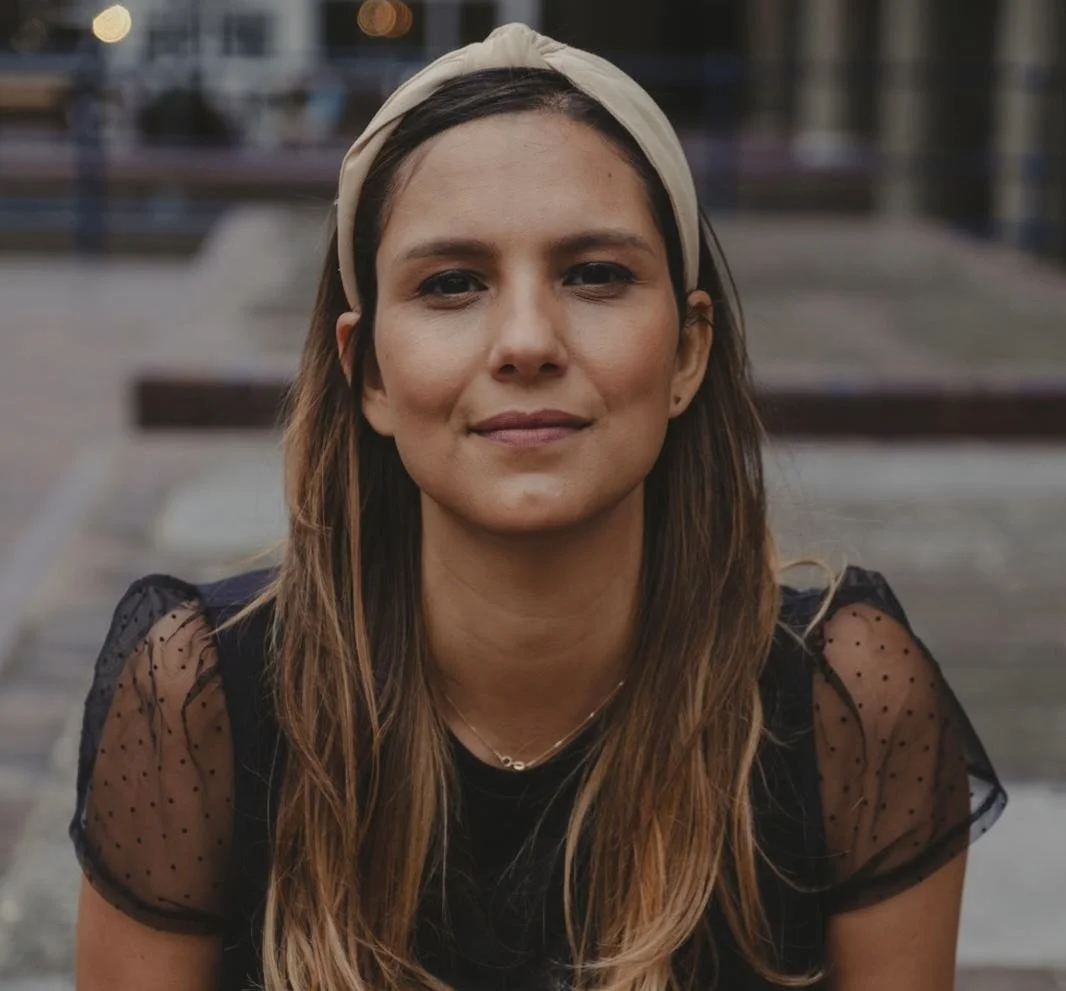
Welcome to the fourth Other Ways of Seeing conversation. Other Ways of Seeing is a project to discover the personal or not so personal art practices of people who work in the creative industries. What they make and why they make it. This conversation is with Steph. I can’t reveal her whole name as she’s chosen to talk to me anonymously. Steph is the Global Creative Director of a toy company. I mean that’s dumming it down, it’s probably the most famous toy company in the world and it’s not just for kids either. It’s brilliant at encouraging creativity.. and clearly her job is incredibly creative. And yet.. in her very little spare time she chooses to be creative in a different way. She is a comedian. She’s been writing comedy for a few years now and more recently she’s been performing.
This conversation was recorded at the end of November 2025. We talk about not quitting your day job and why.. The practice of waking up early every morning to write. The comedy writing techniques she’s learned from Logan Murray. Drinking coffee (and vodka!) though tampons.. bit sad we go into that more. The ‘crumbs of validation’ from her Instagram profile. Admitting the thing that you really truly desire. Bombing but carrying on. Being funny at work. The 90s ‘lean in’ culture. What it means to be ‘professional’. The blurring boundaries between personal and work life. Becoming more confident at stand up. Making people laugh being the best feeling in the world. The sitcom Hacks. Writing about immigration and getting negative comments. And hurricane names.
Before we get into the conversation, a quick note about sponsorship. Right at the beginning of the conversation I mention not wanting to monetise Other Ways of Seeing or look for sponsorship as this could affect who I talk to. Which of course is true but not necessarily a bad thing. I take it back! Hungryman, a super successful production company have just offered me sponsorship. I didn’t even ask for it! And it would be crazy to refuse because now I can buy some decent mics. And they have opened the doors to some ridiculously interesting conversations. So thank you Hungryman for the support and being my first ever sponsor.
Mel: This is going to be audio only. So..
Steph: Yeah, ok, I know.
Mel: There’s loads of people who do podcasts or loads of podcasts now are not podcasts.
Steph: They’re videocasts and then you can get snippets for social media.
Mel: Yeah, I guess that's not what I'm about really. And this podcast is totally about just having fun and talking to really interesting people. It's so much for me a passion project, and it's really nice, isn't it? I think, especially when you have to create or you are in a creative industry that has to make money, that you go, I don't need to do that. And you're kind of more in control of it. And it's just a it's just a relief. And I don't know if you feel the same way when you write your comedy, you probably, it probably feels quite nice, to have an escape.
Steph: Thanks for having me today, by the way. So great to meet you when we first connected. I just loved the energy. But it's right. I think I can remember my husband knows the writer who used to say that it's better to, if you want to be a writer like a novelist, which takes a lot of time to write, it’s better if you continue to have your usual job for some reason, because not just because the money, because you can leave off getting your salary and then write in your free time. But also for the.. just the interactions that you get with people. I think it was Salman Rushdie who had a job in advertising in New York, or I forgot the name, but it's yeah, there's a lot of people who talk about if you're a novelist, and you start getting recognition, you tend to just drop your job, your usual job. But he kind of, I don't know the name of this writer, I'll check it, but he incentivised people to keep your day job and then do the writing on your free time, because it sort of helps. Also the anxiety that you have for not making money can sometimes cripple you, make you procrastinate, ruin your creativity. I would, I don't know, I'm a Virgo, so I just like things in order. So if I had to drop my job and not having any full time job to just create it would fill me with anxiety.
Mel: I think it changes.. you make different decisions. You know, if I mean, say for this podcast if I chose to monetise it and many times I thought maybe I should, you know, like try and somehow monetise it, get it funded or have sponsorship but the minute you start doing that it changes who, or for me, I would change who I spoke to perhaps, you know, and I that's not what it's about and also just turns into something else. And that was actually one of my questions. I know we're going all over, not in order at all in any way, was because of your job, and I didn't realise that Salman Rushdie was an ad man..
Steph: Yeah, he was. I think.. check it. Fact check it but pretty sure that he was.
Mel: I will. That's really interesting. But having another job surely, you know, gives you impetus, gives you material, oh my God.
Steph: Yes! Especially for us working in the marketing world. That's a lot of material in there! Actually that's my favourite thing is finding material. I tend to find material, especially when times are hard. And when you have a challenging project and you work with challenging people. These are the best materials is the best characters. It's the best observations for jokes. So I think there's a lot of value in that, in that keeping your usual job. Of course, it's not easy because it's tiring, especially if you're also a mum. But yeah, I think.. yeah we’ll talk about this later, but especially if you're a mum and you have a full time job, I have my job is actually quite I'm in a quite senior position. So it takes a lot of my will to wake up at 6am every day and, you know, get my coffee, go downstairs and open my notebook and start kind of drifting ideas. So it takes yeah, it's getting easier though, because I think it gets to a point where it's hard at the beginning because you are not there yet. But when you start seeing the fruits of your work and your side work, it makes it easier because you get more excited. So it's almost like this is the reason I wake up every day rather than I have to wake up to do this.
Mel: And is that when you write, is it… so for the listeners StephXXXX XXXXXXX… oh, I’ll cut that out.
Steph: Just call me Steph. Call me Steph like a Brazilian footballer. You know, from Brazil, you know, Brazilian footballers they don't use their surname. It's just Ronaldo.
Mel: Yeah, brand name, Steph.
Steph: Brand name Steph.
Mel: Brand name Steph.. You're a comedian or you write comedy as your art practice, the thing that you do on your side, your passion. And in your day job. You are a global creative director for a company that makes toys. Shall we say that?
Steph: Yeah, yeah. That’s fine.
Mel: Is that ok? And, so we were saying, when you write, when you write at six in the morning.. so you get up extra early to write. Is that your time of like, creating?
Steph: Yeah. And this is a, this is a very new practice for me, and it was inspired by my husband who's also a writer. So he does that every day. And I've been so impressed my whole life by his willpower to wake up every day at six and he goes to his desk and he writes for about an hour and a half. My daughter always wake up at seven thirty. So we have an hour and a half between six and seven thirty. So I've seen him doing that for years, and I was like, I'm never going to do that. But lately, I think because I'm developing my comedy and it's getting.. and we'll talk about the process.. and I'm still very early days, but it's been five years, I can talk about the process in a minute. But I think the more you do it, the more you get motivated because you put yourself out there. I'm taking very exciting courses surrounded by amazing comedians, people. So I think you get the love for it. The more you do it, the more you love it. So I started, this has been, I think a month or two. I've been waking up every day at six. I go to the kitchen, make my coffee, black coffee, and I sit down and I get my notepad. And there's a technique that Logan, it’s Logan Murray, I have many teachers, but the course I'm doing for stand up is at the moment, it's with Logan. And he has, he has a book, I forgot about the name of the book, but it's a comedy book from Logan Murray if you were interested, but he has an exercise, which is just write a sentence, any sentence. And then you start to qualify that sentence. So things like, I love coffee. And then I started writing this, oh yeah, I love coffee, but coffee is not enough. I wish there was something stronger than coffee, but not as strong as cocaine. And then it's like, what it would be, maybe drops like eye drops. Maybe, maybe people will invent one day caffeine that goes on your eye drops. So you instantly, I mean, who has time for digestion, right? You just need instant coffee. And then I started like, oh, maybe there's like tampons infused of coffee. I don't know if this is material, but this is the things I think when I wake up and it was literally like two days ago, I started. I like.. I’m so tired. I just need coffee. I love coffee. I was just drinking coffee. And then it goes in a, like you write a sentence that is very basic and you start adding qualifiers that go to your mind. And then the most, and it starts slower, but it gets to the most absurd places. Like, I just started thinking about once I was doing some charity work with some teenagers and there was a, I don't know if it was a rumour, but it came to us that the teens were drinking vodka via a tampon because they were like literally drinking vodka through another hole. And I was like, whoa, I was quite impressed. I was like, oh my God, imagine if you do coffee, coffee in tampons. But it's very absurd. My brain works like that, but I always start with like, I'm tired, you know, or something that I'm thinking, like very basic. And then you can imagine how this like little sentence can lead you to amazing material. It doesn't have to be, you don't have to be the most excited person to write comedy. It's all in your head. And I started with simple sentences and every day I do one of those exercises.
Mel: It’s a practice, isn't it? I mean, it's an art practice. You've got to keep going and going and going. So it's interesting after like doing it for a couple of months now, it feels normal? Or does it feel like you have to do it, to get through the day?
Steph: It feels part of my day and it's a little bit like exercise that when we don't do it, you feel like you haven’t.. you don't feel completed. It's almost like, oh, my day is lacking something. I need to do that. And also usually there's a.. the magic thing about social media is this instant gratification of, I call it crumbles of.. crumbs of validation, crumbs of validation. Because to get your show ready, which is I'm doing now to get your five minutes show, which is what you do as a stand up comedian to start with, because you start doing tryouts, I have my first one on the 9th of December, which I'm getting ready to. It took me a year to write that five minutes. Seriously, like I'm sure that from now on it will take less time, but it took me a year to, because this is a big step from where I started, which is I'm a writer, I'm a comedy writer. And then I was like, hang on, I really want to perform. I just saw people and I was just so jealous of them. And, but for me to take that leap between writing and actually, no, I want to be the person delivering my comedy. I want to deliver my.. took me a long time to take that courage and even think about that I would, is this an option? I didn't even think it was an option. I started doing courses and training and writing, but even to have a set that I was happy with it took a year. And of course, it's changing with time. But if you want those like crumbs of validation that keeps you going, because it's very hard to be lonely in your, in your bedroom with your art form, if you're painting or if you're writing one liners like me. So sometimes I do some videos on social media, record myself. And that was a big step to get there because we talk about cringe. And I, it took me a long time to, to stop caring about what people think. Because I was, I used to record it, delete it, record it, delete it. I was like, what am I doing? I have this, I really senior position in this company, but like what I really want to do is to make people laugh. And I know I do in person and I know I make people laugh in person, but I want more, I want a bigger audience. And it's, it's embarrassing to say, but I do. So I sometimes I wake up, I write those little snippets of one liners or two minutes stream of consciousness. And I, I upload it to my Instagram.. is it Stephisms what is the name of that? Stephisms comedy.
Mel: Underscore.
Steph: Underscore.. stephisms_comedy.. follow me. And yeah, so I do it and then I get the comments. It keeps you going. I know it's ridiculous, but it keeps you going. Like people commenting. Like, ‘yeah, I feel the same!’, ‘Oh my God, that's so funny’. And I know this, most of them are my friends because they follow me, some of the content that I post to kind of reached a larger audience. But I know my friends wouldn't say it's funny if it wasn’t. So I think I get very happy when it's my friends, when it's other people, you know, they just do it without thinking. So yeah, it's, it gives you the crumbs of validation and it keeps you going.
Mel: I mean, writing something, I guess it's like with all art forms. I mean, you can make for yourself. But when you put it out in the world and you are vulnerable and you get some kind of response, hopefully it's positive. It is glorious. Like it does keep you going. But stepping from writing comedy and putting out your writing, you know, online or wherever it is, wherever it lives, to then getting on stage in front of an audience! Like I don't know if I could do that. But I mean, I get it though, because it's your, your work. So who else would deliver it? Who else could deliver it your way. Unless you, I guess you directed people or something. But then I just, yeah, no, I think it's very, it's incredible. So brave.
Steph: It’s a big step. And I started posting one liners only during the pandemic, because we all had that terrible moment where everything seemed so desperate and scary. And my way to cope with that was writing one liners about the pandemic and about being a mum. I had a two year old during the pandemic. So it was so like hard that the way for me to cope was writing those one liners and posting those one liners. There were a lot of mums who I think that at the time I only have three and a half, three thousand and a half followers now. But at the time I had a lot more, a lot more because I used to be more active, but I had a lot of mums laughing because they felt the same. And it really was the thing that made me survive the pandemic because I was just, you know, it’s the thing about like waking up, not brushing your teeth until it was like five p.m. You know, there's a lot of things there funny observations who I knew everyone was doing. Or maybe I didn't know. I thought it was just me. But then when you post it, just a one liner. Everyone was kind of associating themselves with it so it was very, yeah, it was it started with those one liners and I, I never thought about myself, like putting my face to those one liners like I always had this thing where I needed to be very sophisticated because of my job, I’m a creative director, oh my God, how embarrassing it will be to for me to say those things to camera. And, you know, if you look around you, everyone is, you know, it's so, you know, put together.
Mel: That’s what you think.
Steph: Yeah. But I know I'm not inside. I'm not. I have all these thoughts and but I, it was really, it took me five years, I think, until I get there. No, I really want to. I really want to say it. I want to be famous. I want to put my face on the joke. It's me saying that. And I know sometimes it doesn't connect to the person I am every day. But this is what I think subconsciously when I'm writing the little sentences.
Mel: So subconsciously you're imagining yourself delivering those one liners.
Steph: Yes, I think it's a.. I think my therapist says this, I'm getting very deep here.
Mel: Comedy is deep man.
Steph: I had a therapist once that said that they talked about how we need to admit the thing that you desire. And I think there's a lot of things that people are scared to even admit that they want something. And I think I was that person. It's like, I really want to be a comedian. I'm just, it's so out of my league in my, it's just an option that it's so far away from where I grew up, from my current job, how people behave around me. But if you really want something, you just have to say, I want that. And for a lot of people, it's very hard to say, I want to be a painter. I want to be a card reader. I think for people is like, oh, people will think it's embarrassing. People think it's, you know, people will laugh. And I, I don't know, it was a process to.. and it was a lot of therapy to fix that. No, I want that. And I remember when I was at university, I dated a boy who was a comedian. He was a stand-up comedian and I fucking was in love with him. I was like, I really loved him. And then the, when I think about how desperate I was when he broke up with me, I think I'd like, I want it to be him.
Mel: You were giving up a dream.
Steph: Yeah, I was dating my dream in a way. And that was, it's always so, I mean, I could go forever. But I feel like it wasn't, when I saw him doing that, I didn't even think it was an option for me. I didn't even think that I could ever be good enough. And I know I'm, you know, I'm getting to that. I'm getting better every day. The first time I did it, it was okay. Another time I did it sucked. And I had to do like a test once to get booked and I bombed. I got the time wrong and I was hungover. I didn't know it was like 8am. And I thought it was two. So I thought I had time to like recover and I didn’t. So it was really bad.
Mel: You did a test at 8am and you were hungover from the night before?
Steph: I just didn't know. So I, yeah.. so I bombed and it was embarrassing. And I thought about like, oh, it's so bad because it, it takes also time for you to, when you start reading your comedy, you start kind of almost like performing as if you were someone else. So being comfortable on stage as yourself and telling the jokes, it takes time too. So I'm getting there. I'm still not there yet.
Mel: But the thing is you haven't given up. So even though you bombed at the test or, you know, the other things have happened, you haven't gone, oh Jesus, shit, I hate this. I'm not going to do it. You, you still have that.. like you've got to, you've got to carry on. You've got to improve and you want to get better at it. And you're not going, oh no, this is not for me.
Steph: You have to start doing like whatever you want to do, you have to start and you have to go through the bad to be good. When I started recording my videos online, I look back, it was so like stiff. They're still not like, like top, but I like it more. And even my friends comments say, oh yeah, you got better. It's like, yeah, I know because you just have to do it. If I have never done that, you're not going to get better. You want to get better because a lot of people just think that you need to start amazing and it's not, it doesn't happen with anyone like that.
Mel: This is what we tell our children all the time, but sometimes it takes us a while to understand that we're not going to be great at it straight away. Like I tell my children, my daughter, she wants to be good at something immediately. Otherwise she doesn’t want to do it. And it's crazy because you just have to practice a few times and you get better and then you see the light and you see, you know, you can see you getting there and it, and it's such a joy. And it also has a sense of achievement going through all the bad to get to the good. But it is, it's just carrying on going. And I mean, tell us a little bit about your.. to get to this point, wherever it is, you know, the crescendo. Does the alter ego help? Like is it, is that helping you kind of putting yourself in it in another person to get to that point?
Steph: I think so. I think so because I, in the Logan's book, there's a lot of talk about attitude and how, you know, sometimes you can be a character on stage. Sometimes you can just have an attitude and I try to have a different attitude that is not how I appear to be day to day. But, you know, I have this sort of dark humour. Sometimes I'm a bit flirty. And I permit myself to be, I allow myself to be that person on stage. And I think it's, yeah, I think sometimes it's not me saying, you know, that's why we talked about this when we met. But I like to keep my work life very separate than my comedy life. That's why I'm not telling here where I work and I don't usually tell my co-workers. They know that I like comedy, but I’ll never, if I'm ever doing a show, I'm never going to invite them. I like to keep it very separate because I think that I just feel more free for some reason. And that might be society thinking like you have to behave some way. You cannot say that.. you are a woman, you are a mum, you have this senior job and oh my God, imagine if people, and you know, it can, let's be honest, if some people see it, it can, it's not, I don't say anything offensive to anyone, but there are things that people might think and don't say it. So it might be too much for some people.
Mel: You have an opinion. Lots of comedy is about having a strong opinion about things, which is what makes it really funny. And your job is incredibly responsible and you are responsible as a mum. So how different are you at work then? Are you, are you funny?
Steph: I am funny. I use comedy a lot.
Mel: I bet that's really helpful actually, in a high powered like stressful job.
Steph: Yeah, I actually had a, there was a meeting yesterday where I had to get some budget with finance and the finance director was like pretty serious. And he was like, oh, there's no more money. And I just said, come on, there's money. I know there's money. I just go. I have that personality. I can't help it. And it's so funny because I had some feedback before. I love to be very honest about this because I had some feedback before around my seniority and how I, I act because I am very easygoing. And I make jokes because I like whoever works with me likes that. I like that kind of environment of fun because I think this leads to the best work. So I'm always, I'm always making joke about things that are going wrong. I always make jokes about things that are, you know, not about people because I would never do this. And I hate comedy, making fun about other people. I don't even find that funny, but about the situations of work. If there’s a hard meeting, if there’s.. if we have to go again, I'm always that kind of making fun, sending gifs about, I like that because it makes it more fun and more fun leads to better creative work. But I had some feedback around like, if I wanted to be more senior, I needed to button up a bit. And I am buttoned up as fuck. Like, I'm so buttoned up. Like, I'm a Virgo in terms of like, I do everything on time. I never miss a deadline. I deliver everything. I do my job as best I can. So I, you know, it sort of surprised me when this boss told me, you need to appear more serious and kind of serious in forums and kind of senior for, and actually, I think this is my strength is to be senior because I am and I do my job very properly. And I have no doubts, but I also bring that light heart-ness to it because everyone's so serious.
Mel: I think that’s a superpower!
Steph: Everyone is so serious! I also worked and I think I got to this point because it was very confusing for me that duality in the job and my personality, it was very, very, very hard when I was getting to that senior position. But now looking back, I think I had amazing role models, you know, people who I worked with who were powerful, but they are just themselves and that never stopped them to be who they are. And so I think I’ve had incredible role models of people who are very funny, who said things, didn't have to have that serious, like seriousness about, or like be super stiff or, and I think that sort of really inspired me. So I have my role models. I'm not going to name them because otherwise everyone will know who I am.
Mel: They’ll probably be able to work it out..
Steph: Incredible women.. I had incredible creative directors, female creative directors who why I see many other ones trying to appear, you know, please the.. that kind of like 90s ‘lean in’ type of female worker who's like needing to do this and it to be very firm. And almost like need to be a man like that kind of very, very heavy because to show that your power to show that. And I think that when I was, when I was getting to where I am in my career, I've thank God met a lot of women who were just themselves and they were silly. I'm silly. This is the way I love I know I want to be a comedian. I'm so silly. I'm so silly. Like I'm silly with everything and I just don't think I can change that. I honestly don't think I can change that in me.
Mel: And that's probably why you've got so far as well in your profession, your professional job. I think it's really hard, isn't it? There is always that idea that you need to be serious and firm and, you know, to create to get people to do stuff for you. But I don't think that's true. You can absolutely make it fun and people want to work because it's fun.
Steph: I think it's the word ‘professional’. I think the word ‘professional ‘sometimes really, really it's a synonym of button up serious, button up. Being firm. Firm. Serious. If I forget to, if I'm a manager, I need to be on point, serious. And I have to be sometimes of course, but I, my favourite moments at work and in life of my daughter is bringing that, you know, don't take yourself.. I don't take myself seriously. And I don't want my daughter to take herself seriously. I think that will be, that will be my happiest thing if I, if I can see her laughing at the jokes.
Mel: Yeah, no, it's so important, isn't it? And I know, I believe in silliness as well. What happened to the, the guy who told you that you needed to be more serious?
Steph: I mean, that's a position is a feedback. Fine. You know, he’s still going..
Mel: Did you just bat it off?
Steph: I think if that feedback was said to me five years ago or eight years ago, it would hurt me. But now I'm like, no, mate. I think it's a lot of people who are from that kind of ‘lean-in’ generation that, you know, there wasn't many females who are who were senior leaders, there was just males.
Mel: He’s older..
Steph: Yeah, older. And from that generation of like seeing someone older, or sorry, the male dominated world and, and sort of like having to have that masculine energy to do and I don't have that. You know, I have a lot of drive and I’m very organised in all this, like, but things that are considered buttoned up and professional, but my behaviour works sometimes is so silly. I've said, you know, I don't need to excuse, I used to excuse myself for that. I don't even anymore. So if you work with me, you know that I will say some, you know, I'll give some sort of silly recommendations of copy, of ideas. They were silly things like poo. I work with kids too. So there's a lot of poo jokes in there. But yeah, if you work with me, you will know that I will bring that to the table with, with no shame. I think I used to be a bit embarrassed sometimes that it would just go, my old creative partner used to have a book, a notebook, and she started calling ‘Stephisms’ because it was all the kind of very silly things I used to say when we were brainstorming. And, and it would be stupid sometimes or a bit silly. So she started writing down because there was so like stream of consciousness. And yeah, she actually like gave that at my 40th birthday. It's like Stephisms, those are all your Stephisms. She started reading all of them. It was very sweet.
Mel: Amazing. And I mean, I kind of understand sort of politically you don't want to tell work that you're doing, you know, you've got this practice that you do comedy but it would they really have a problem with it?
Steph: I don’t think so.. I don’t think they would. You know, I think everyone is allowed to have a personal life but I just really love that separation. My old job. I used to work at a, I can say that I used to work at a tech company. And everyone kind of it was very common for the, the environment that everyone follow each other on Instagram as soon as you start working with. And that then blurred between my work life and my personal life was really bad for my mental health, I thought. Because work was pretty much like anything I wanted to post any joke I wanted to post. I knew that there were people work people looking. And I think there is if you if you like it or not there is this kind of like if you were someone's boss if you're if I'm a manager and I'm telling jokes. I think there is like a new following and you know the person is following. I think there is this.. I don't know. I just, it's not that it wouldn't be allowed it’s totally allowed. You're allowed to have your personal life and do your hobbies and do your thing. You're allowed to paint if you want you're allowed to do, it's not that but it just, it just cuts my freedom a little bit. And I liked having I think it blurs too much. I think our worlds are very blurred at the moment. And that was not… especially when work gets hard, and you want to have a, you know, something to spit out like all your, especially in comedy, you don't want to know that there's people from work looking and it might be that the people here found my Instagram and they are watching, but at least I don't know. I think that I like, I like to have those boundaries. Although I didn't, I didn't have that in my previous job. It was pretty much everyone is a friend, everyone follows you and there was something that kind of bothered me in terms of like I want to have my separate life. I know it was like this before social media. And I sort of think it's best for me. It works differently for different people, but I think I prefer that when I'm out of work, I’m out of work. Yeah, I love that feeling is like I switch off my computer and that work’s gone. Ahh I love it. And before it's like people texting you, oh, that's great. It's like people from work. And those people not necessarily are your friends or, you know, they're lovely, love all of them. But I think that I really, it was with time, I really learned how to set those boundaries and I think it works different for different people. But I really love this mental space that you switch off your Teams, you get out of work and then you have a whole new life. I think people should do more of that. I would recommend it.
Mel: I think also, you know, like we were talking about if you try and monetise something, it affects the work that you do, your passion, your art. And if you're always thinking that someone from work is watching and potentially judging you or.. and it may put your job in peril, then it stops you from being you.
Steph: Yeah.
Mel: Entirely.
Steph: And I maybe because I think everyone is allowed to have your personal life and it's not that I'm telling these jokes at work. Even though it wouldn't be a problem sometimes, but I think it's just, I think it's just that piece of mind that you're just doing for an audience that not necessarily is the audience that imagine like doing a stand up comedy show is hard in front of an audience of strangers. But I think it's even harder if you're doing that for people who we work with and you see every day and I actually like even my friends, I'm still haven’t invited them, at some point I will because I want them to laugh hard when I the joke doesn't land. But I just think it's healthy. I think we're getting to a generation world where everything is so blurred that is, I can see why people are having anxiety. I can see what people are having mental health issues. I had that I had a huge burnout leaving my job last year. And I think that when you have that kind of really burnout in terms of I can’t deal with this this… It's all blurred in your head. You don't know what work you don't know what life is you you're working all the time you have messages on your WhatsApp is you really learn how to.. it's peaceful. I sleep well.
Mel: Because you separate it.
Steph: Yeah.
Mel: So when is your five minute gig going to happen? Have you.. I mean this thing that you've been working for over a year for..
Steph: Ninth of December.
Mel: Oh, shit. So quite soon.
Steph: Yeah. So this is part of a course. A stand up comedy course from this guy called Logan Murray, he's a famous comedian. I've mentioned him a few times and he wrote a book and tomorrow is my fourth session. I had three sessions. So we had already a few goes on the microphone and tomorrow I have to do my two minutes and the day the other is I've already done two minutes last week and it went well. I actually recorded it if you want snippets for this. I'm I am absolutely love to see if I can record it tomorrow too. So see yeah. So it's the first day was hard. The second day was terrible. I came back home feeling really awkward because it's very you're in a very vulnerable position with people that you don't know yet. But they're starting to be your friends because they're all in your WhatsApp group talking about comedy. It's great to have a community if you like something and you want to do a side gig. It's so good to have a community that's that helps you that is there or share their work. I think we all trying to do that. And I did my two minute very impromptu on Saturday last Saturday and when well I recorded people. I don't have a video recording but I have an audio recording, is so great to see the laughs like the actual laughs. It makes me so happy. It’s the best feeling in the world Mel. It’s the best feeling in the world because I know they are not.. I know that they were not faking, like there was there was a genuine laughs and and you know some of the things you say you think that they're going to laugh more but they don't laugh at other things. It's so it's such a measurement isn't it laugh, like it's such a great measurement of work and it's just the best feeling. I've done my first five minutes at another course I did it and there was like a final show where people have to pay is the same as these people pay to go and see the the beginners or the people who are like have potential as they call. And I did one last year in Bath at the Komedia club in Bath it was the after you finish is the buzz that it gives you is the best feeling of your life.
Mel: Really..
Steph: Yes. It's the best feeling.
Mel: Is there anything that you've specifically seen that's really inspired you or blown you away it might be art, it might be comedy..
Steph: Actually the series ‘Hacks’. Have you watched it?
Mel: No.
Steph: Oh my God so good. It's on Amazon Prime.
Mel: Is it.. Hacks.
Steph: Yeah Hacks.
Mel: What is it about then?
Steph: So hacks is about comedy and it's about this older comedian who is reaching the end of her career. She has a residency in Vegas but her material is not really landing anymore because it's sort of everyone's just tired of it needs a refresh. And then her agent hired this young writer who is sort of like a difficult, a bit failure kind of young writer who writes comedy and her agent hires this young lady to write new material for her. And it's actually it's a lot about comedy and how different generations laugh at different things. It's amazing. Just a study of like what lands in one era what lands right now. And it's about intergeneration relationships. So the woman and a younger lady and how they connect. Oh it's beautiful.
Mel: Oh my God I’m going to look that up. I'm really going to watch that.
Steph: It’s so well done and so funny and yeah, it's really lovely. I love it for so many.. It's funny as fuck. It's the relationship nuances. The points around comedy being different and different like 20 years ago and what the things we used to laugh at 20 years ago and what we laugh about today.
Sorry, someone is literally calling me.
Mel: Well, that's what happens when you take a couple of hours out of work to chat about your private personal art practice!
And would you ever write for someone else?
Steph: I would write for someone else.. That would be a pleasure. I don't know if they want my writing but I would definitely write for something else. I think I put in a position of… I don't think I put in a position but I just love this. The kind of different how funny is different in different ages, you know. For different people. I love like this is almost like my curious mind is that.. I love US. I know a lot of people don't like it but I love, I love American comedy. And I love British comedy too. British comedy is my favourite. But I do love.. like I grew up watching South Park. And I used to.. my dream was to like be in that writers room that you heard about everyone kind of get together. It's my dream because it's so funny. So I've watched that even from a young age which I wasn't allowed to but I just thought it was so funny and I love Saturday Night Live. I still love it. I know a lot of people here don't like it. I know they're doing a UK one. Can't wait. But I think if you watch the one from the 80s, you know, there's a lot of things that that, you know, it's not funny now or you know, it wouldn't be even a possibility to then laugh about it. So I just love like even in Brazil, there's a lot of comedy from the 80s that you watch and you're like whoa.
Mel: Yeah. ‘Oh, it's so offensive. I'm so embarrassed that I'm laughing..’
Steph: Yeah, ‘I'm so embarrassed that I’m laughing..’ I love just watching that those changes because I'm sure there will be things that we're saying now and I'm laughing about now that we won't be able to laugh in a few years. Who knows? Or it's not funny.
Mel: Would you say that your comedy is contentious in any way? Like, I know you talk about immigration a little bit and I don't know there's those other bits and pieces in there that perhaps do you feel like might be on the edge?
Steph: I think for all comedy can be charged for some people. It can be not charged for some people. So the immigration point, for example, I talk a lot about, you know, there was a joke I posted on TikTok, which was I've, you know, I had my visa rejected a few times because of mainly because of bureaucracy. But I think a lot of people don't realise how hard it is to get a legal visa in this country in the UK. I think there's a lot of people saying like, oh, they're all coming over here. But like, if you come here legally, you have no idea how hard it is and how much money you have to pay. So, you know, a lot of people don't know, for example, that if you are a legal immigrant in the UK, you have to pay for the NHS. So you pay in advance for every year that you live in the UK. You have to pay a thousand thirty five pounds a year. It's like if you're doing a visa that is two and a half years, you have to pay like almost three grand more than that. In one go. And this is not including your visa fees or the other like biometric fees. So it's a lot of money. You have to pay a lot of money. A lot of people don’t… It's a money making thing. So a lot of people don't know that and they just think we're coming here. And so I had this and one of the points of getting a visa is the is the language test because every visa that you apply for, you need to do something called IELTS or TEFL, which is an English test.
Mel: I used to teach it.
Steph: Yeah, did you?
Mel: Yeah, years and years ago.
Steph: And it used to be that, you know, when I when I moved to the UK in 2007, you could just apply and you needed like basic level of English. And now they've upped the level to upper intermediate. So it's very.. if you want to come here legally, you have to be a you have to have like a lot more proficiency.
Mel: So better than your average English bloke.
Steph: And I just made a joke around there's a TikTok where I made the joke because like now you have to have upper intermediate language…And meanwhile, the Brits living abroad are only required to mispronounce ‘hola’ and ‘una cerveza por favor’ and I made it in that there was, I for me, it was just like charged, I know I thought it was funny. I asked my husband, he was like, he's British. Do you think this is offensive? He was like, absolutely not. It's like, true.
Mel: It’s so true.
Steph: But you know, I got so many comments of like, ‘but the people living abroad don't claim benefits’ is so it's so charged that you you have no idea how anything you can say.. but this is like another point about the separation is like, what is a throwaway comment in a funny comment for you. A lot of people laugh, by the way, and a lot of British people said it was funny and true. But a lot of people were like, ‘oh, but we don't claim benefits’.. ‘but English is the main language’.. ‘so we're not required to, because language English is a universal language’. Like we're not, you know, ‘we don't need to learn another language’. I mean, I leave it up. I used to delete anything that.. because I used to make me feel very uncomfortable. But now I'm like, yeah, leave it up! Get my algorithm up, babes. There’s lots of it. And I.. and if you read it, it's like it’s.. people don't some people don't like it. And you think it's just a throwaway comment, but it just yeah, this is the thing, comedy really depends on the audience. And some people find it funny. Some people won’t, or take it personally. But I had this other joke around.. sometimes I'm so tired. I wish, you know, you know, if there was ever a war and I was in a bunker, will I manage to finish reading a book? You know, like, oh, if I fantasise for that bunker. And as I for some people could be, you know, a lot and for me is just like, this is just my subconscious being like, I'm not saying that for real. This is like what I'm thinking. And it does, you know, that's the magic of comedy. And I think that kind of pushing the edge is what makes people laugh because if you just say the expected, it won't make people laugh.
Mel: But it's like you talking about your practice in the morning, a six o'clock practice in the morning where you start with a really boring sentence that doesn't mean anything and you work on it and you work on it. And it makes it funnier and you're like looking at things from a different perspective. I think that's, I guess that's what it is. You're like developing the thoughts. I do wonder when I look at you, I just think in when you're at work, do you, I can just, you know, in certain situations, your brain must be going like, whirring away and thinking crazy shit. And then you probably have to go home and write it down or something.
Steph: I write it on my phone.
Mel: The way you are, like, you can see that you’re…
Steph: Yeah my notes on my phone.. My notes are literally like, yeah, I literally like this is, if by the time you have this, you've published this, I'll be done my show. But I had a.. I saw this news headline on the bus two days ago, and there was the hurricane Claudia. And I read the headline and said, Oh my God, like, will my name ever be a hurricane name? And that's now my, that's now my intro for my show. So it's like, Oh, you know, will I ever have my name is Stephania, not Stephanie. It's like, will I have ever have a hurricane name after me? Will I ever, you know, get to destroy coastlines? Will I ever make that list? It's like Katrina, Patricia, Claudia. Maybe Stephania is not enough, but you know, is Stephanie? That's a category five bitch. Stephanie sounds like she's going to wreck some roofs.
Mel: Yeah do some serious damage.
Steph: So you see the process, like I, I saw the headline and I, this is like notes on my.. I wrote that and I woke up the next day. I was like, I'm excited to wake up and write the whole intro. So that is what I'm going to open my.. and, you know, I can ask people what's your name? Mel. Mel.. yeah. Maybe it's a hurricane Mel.. Melanie? Melanie will be a good.. Hurricane Melanie will be good!
Mel: Oh, destructive! Yeah. Five minutes sounds like a really long time. Does it feel like a long time?
Steph: It feels a long time. Yeah, it feels like a long.. if it's going well, it doesn’t. If it's going badly, it does.
Mel: And do you have notes?
Steph: No, no, no no. Yeah, I think some people do it, but I don't tend to, I practice a lot and especially English being my second language. It's very hard for me to, to improvise. So I like to have my material very, very tight before I go. I think it's, I think everyone does, you know, everyone does, I think it's hard, it's hard to improvise on the spot. You have to be really experienced. Of course people do it and they're amazing, but I think you have to be really experienced. And especially if English is my second language, I don't think I'm ever going to be able to, or maybe I will. I'm starting to do more improv exercises to help with that. Things like look at other, look at things around you and name them different things. It's very hard. You think it's easy, but it's kind of training your brain to improvise and doing things. But anyway, there's a completely different story, but it's, I practice a lot. And sometimes I wake up when I wake up this 6am, I get my daughter's microphone, you know, one of those kids microphone. And, and then I just..
Mel: ..just like, start chatting away. Improvisation is really hard. But this is the thing I think it's incredible that you can tell jokes in not your mother tongue. You know, I think that's another level of understanding and comprehension of a language as being able to tell a joke in another language seems just like, I mean, I don't, don't speak any other languages and certainly not fluently. I mean, you know, bits and pieces here and there to get around. But telling a joke and all those nuances of culture. It's extraordinary really.
Is there anything you want to add?
Steph: Just thank you for having me. I mean, it’s funny because I'm still, I feel that I'm still so early in this, but it doesn't matter because it's whatever you do that makes you.. gives you pleasure. And I just, I just incentivise everyone to find that thing that you want to, you know, what's the thing that you really desire to do and you never had the courage to admit that you like? I think I would invite everyone to find that thing because it’s.. it keeps you up in the morning.